
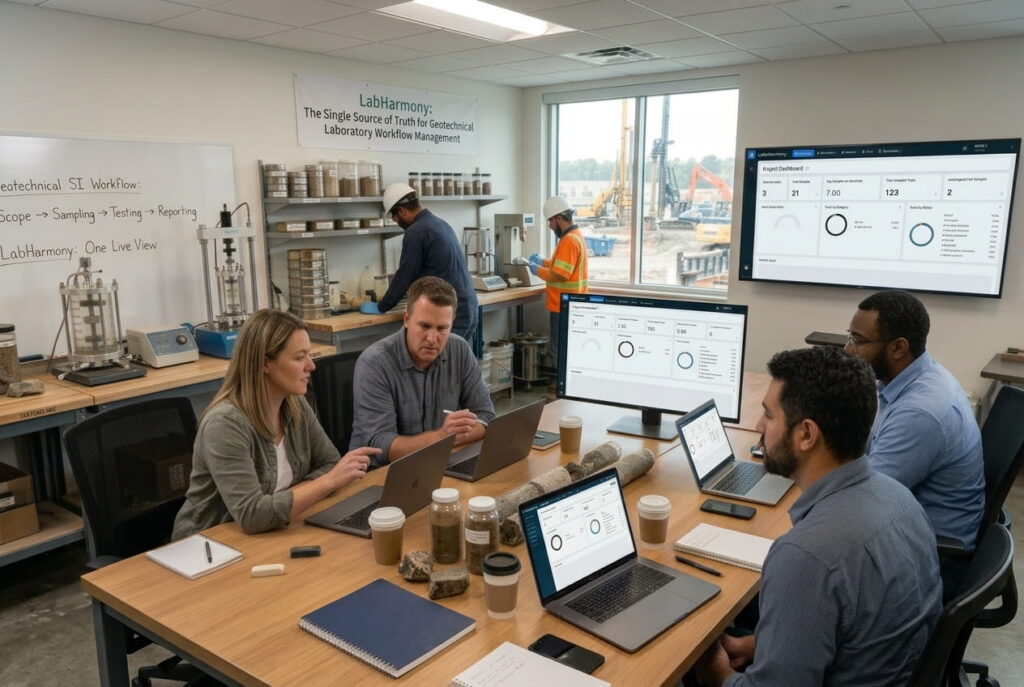
Managing a complex site investigation programme requires clear visibility into samples, testing progress, approvals and outstanding actions. But there is a difference between a meeting used to make decisions and a meeting used simply to work out where things stand.
On many geotechnical laboratory programmes, a significant part of the weekly meeting can be spent going through the same questions:
- Which tests have started?
- What has been completed?
- What is waiting for approval?
- Which samples are unsuitable?
- What is holding up the programme?
These are legitimate questions but they are mostly questions about status, not questions that require a meeting.
When the meeting becomes the reporting system
If the current state of the laboratory programme is not readily visible, the progress meeting becomes the mechanism for rebuilding it. The laboratory provides an update, the site investigation (SI) contractor adds information, the consultant raises an outstanding approval and the client asks about a particular test. Gradually, everyone develops a common picture of where the programme stands.
By the time that picture has been established, a substantial part of the meeting may already be over. For a project involving several organisations and senior technical personnel, that is an expensive way to exchange information. More importantly, it leaves less time for the discussions where those people add the most value.
Status and decisions are not the same thing
Knowing that a test is on hold is a status but deciding what to do about it requires judgement.
A sample identified as unsuitable creates a different question: should the team select an alternative sample or revise the testing programme?
When test conditions are awaiting approval, the status itself is only part of the issue. Resolving the technical matter preventing approval may require discussion between the consultant, client and laboratory.
The key point is simple: project teams should have access to current laboratory status before the meeting begins. This leaves more time to focus on decisions, technical issues and programme risks.
A better starting point for the meeting
With LabHarmony, permitted stakeholders can access the current laboratory programme directly. The shared environment gives permitted stakeholders access to samples, assigned tests, progress, approvals, holds and other workflow information.
This changes the starting point of a progress meeting, instead of beginning with “Where are we?” the team can begin with “What needs our attention?”
The meeting can focus on exceptions, technical decisions, programme risks and actions rather than spending time reconstructing routine status.. For complex site investigation programmes, regular communication between clients, consultants, SI contractors and laboratories remains important. The objective is to make those meetings more useful.
Meet for decisions, not for status
Experienced engineers, project managers and laboratory specialists create the most value when they are solving problems and making informed decisions. They should not need to spend the first part of every meeting establishing information that could already be available to everyone.
A live view of the laboratory programme does not replace collaboration. It gives collaboration a better starting point. Instead:
Open the live view. Meet for decisions only.
If your project meetings still spend too much time establishing where the laboratory programme stands, see how LabHarmony provides a shared, live view of laboratory delivery.